Listen Like a Programmer
From Wave to Note with Mathematics and Code
Kengo Ichiki
Turn sound waves into notes with mathematics and code. A technical book on transcription by ear that relies on method, not on talent — the English edition of the Japanese original 音楽と数理 才能にたよらない耳コピ, translated by the author.
Also available: paperback on Amazon.com/Amazon.co.jp: paperback・Kindle
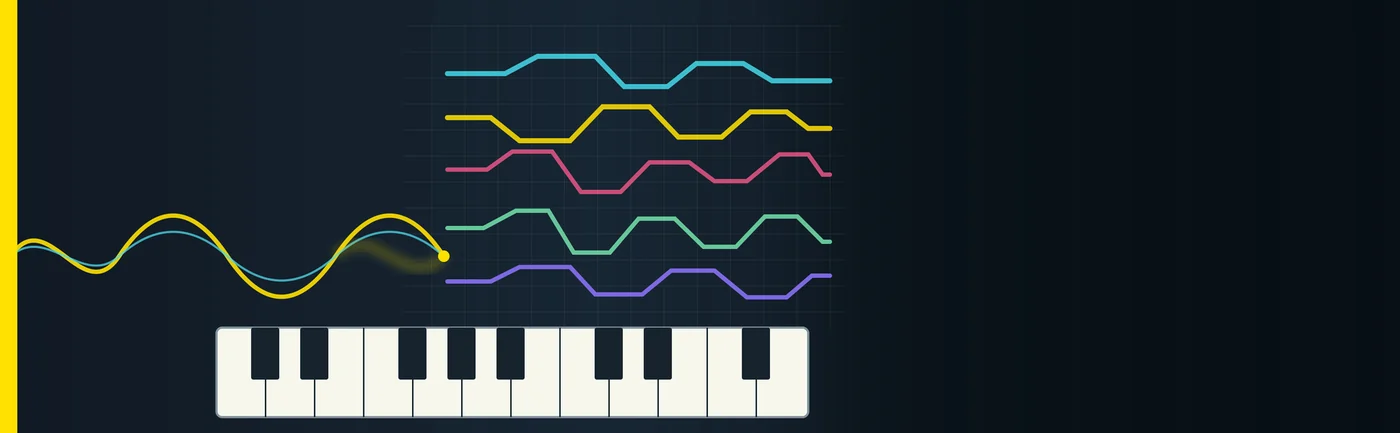
From waveform to note, one step at a time
Start with sound and pitch, follow the Fourier mathematics, then see how the program WaoN uses those ideas to transcribe audio into MIDI.
Three paths through one question: how does a wave become a note?
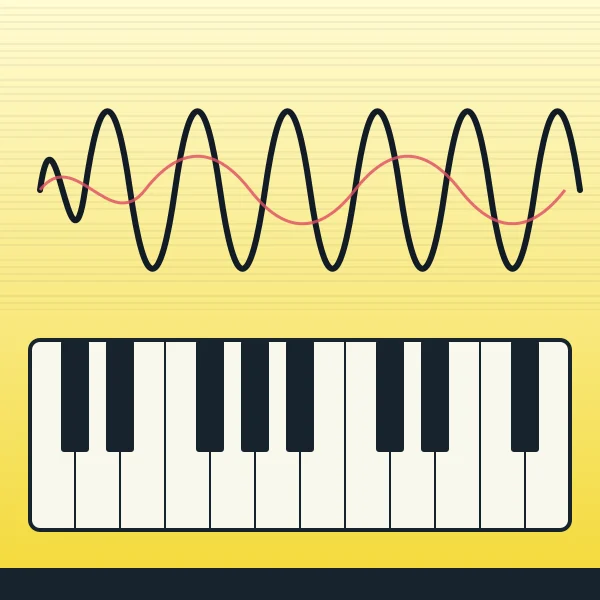
Begin with music
Explore sound, pitch, harmony, and playback speed, starting from the musical questions that set the investigation in motion.
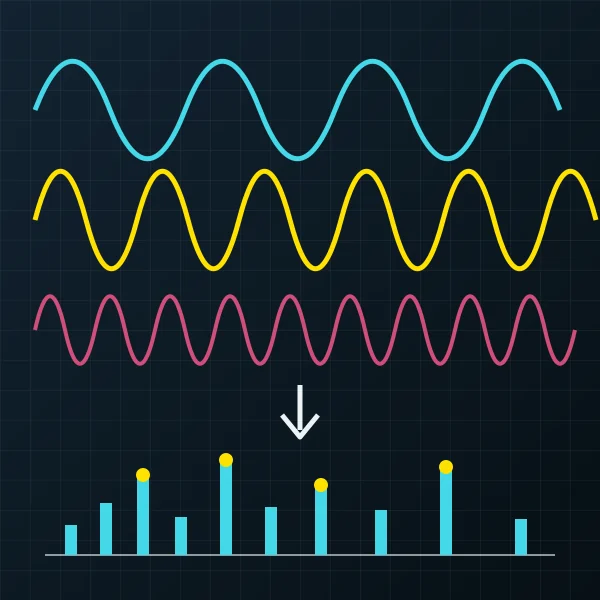
Follow the mathematics
Work through Fourier analysis, the discrete Fourier transform, power spectra, window functions, and phase-vocoder frequency correction.
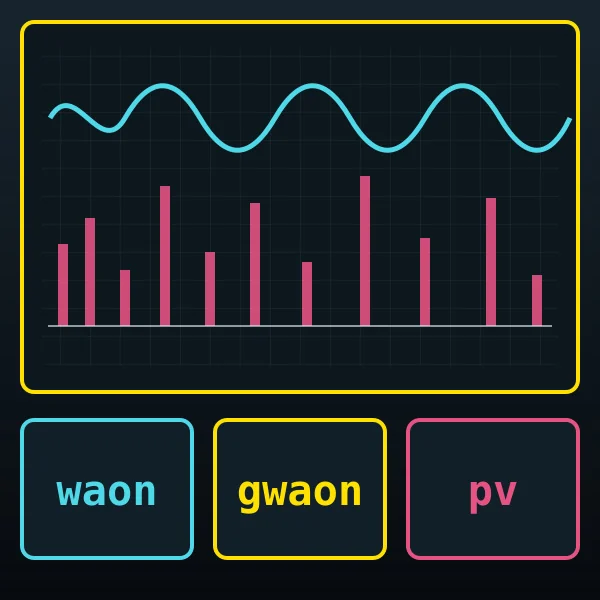
Use the programs
Work with waon, gwaon, and pv, then compare a traditional transcription algorithm with a neural-network approach.
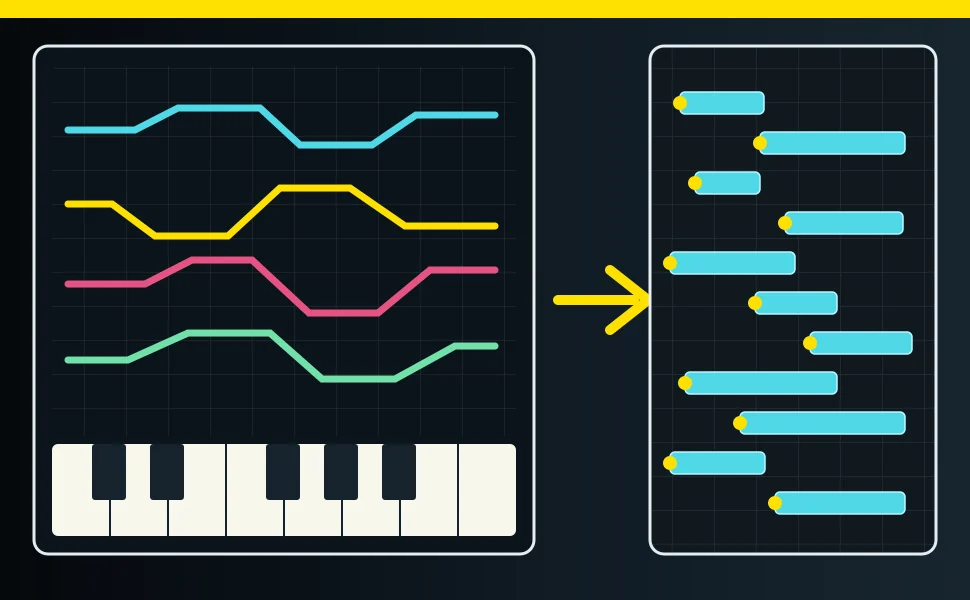
Choose your path
Read the music chapters, concentrate on the programs, or go deeper into the mathematics. Each route returns to the same question: how does a wave become a note? For curious amateurs who want to enjoy music more deeply through mathematics and code.
What you should bring
This is not a method for training your ear. It is an account of how a sound becomes a note — in music, in mathematics, and in a program you can run. High-school mathematics and a little programming experience are enough to follow the main line; the Fourier chapters reward a slower second reading.
After the book, the tool
The program the book describes now runs on iPhone, iPad, and Mac as わおん — Music Transcriber: waveform, spectrogram, and detected notes on one timeline, editable by hand, exportable as MIDI or MusicXML. The first 30 seconds are free.
About わおん →
Read it? Write an honest review on Amazon → — a star rating alone is fine. Other books and the app: write a review.